
It’s very easy to get carried away finding new artists on the internet, however because of the nature of my project, I thought it was appropriate to use artists who are slightly older.
Following on from my decision to use alternative papers and their scale, I used this opportunity to really create the essence of my chosen artist Leonardo Da Vinci.
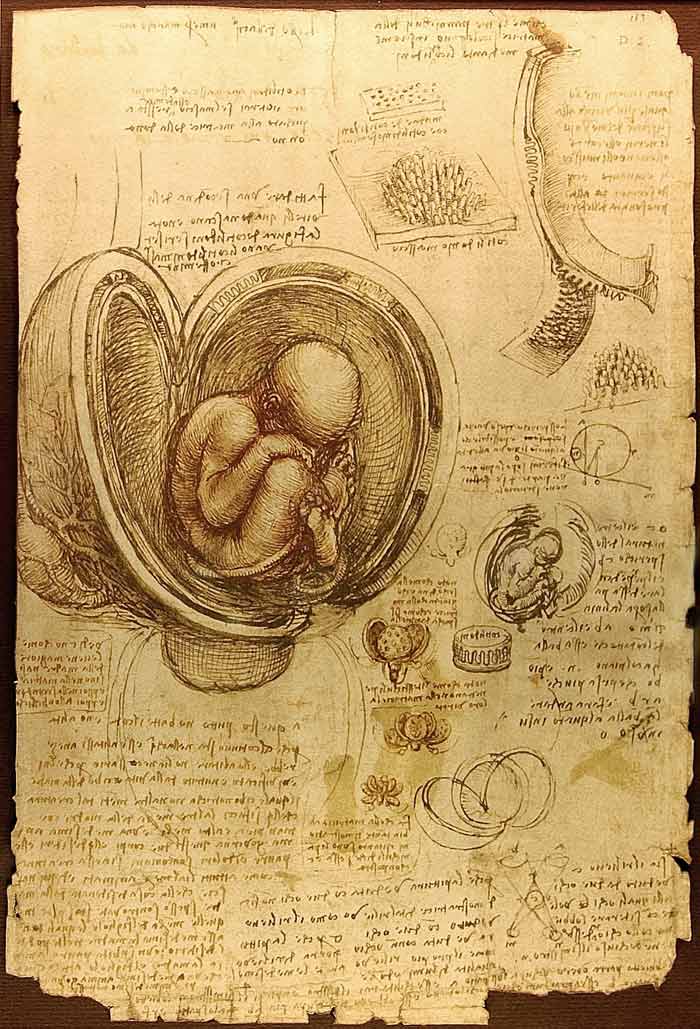
As I analysed his work, I noticed that the paper was of a sepia tone instead of white. Since I had not experimented much with other colours, I decided to tea stain a piece of paper to replicate that colour.
Not only did it work, but I think it adds to the underlying concept of growth in knowledge about our bodies. Our bodies are a product of thousands of years of evolution and yet we still don’t understand so much; who knows if we ever will?
When many people see a sepia-toned photo or drawing they instantly associate it with length in age, so hopefully, this solidifies the idea of appreciating how far our bodies have come.
What I love about Leonardo’s approach to human body art, is that he wanted to understand what was going on inside us, which is why he dissected bodies. He wanted to understand how we functioned before he drew it and I think that’s why his art is so realistic and accurate every single time.
If you understand an object, inside and out then you will almost know exactly which ‘bit’ goes where.
This article was interesting to read about how his drawing was ahead of his time:
PAPPAS, S (2012) Human Body Part That Stumped Leonardo da Vinci Revealed Available at: https://www.livescience.com/20157-anatomy-drawings-leonardo-da-vinci.html Accessed: 05/01/2019

At first, I studied the skeleton and mapped out all of its contours but then I thought that it just looked plain like this, and would just look like another still life drawing. I want people to look at the study and absorb all the curves and creases of this object rather than seeing it as a drawing of a skull in front of me.
This is why I decided to add a black outline and remove the shading.

I think this would make a could base for a wire drawing as the linework is very strong. It is vastly different from Leonardo’s work and I’m not sure if it comes across as showing the function of the skull like his work does. I think this is down to the angle that I drew it from, whereas if I had done it looking straight at it or from a side view, it perhaps would have looked like I wanted it to.
Since I wasn’t happy with it, I decided to add back in the shading. Although this continues to add to the idea of it being a still life drawing and not a study to show function, I don’t necessarily mind this as I have learned from this. From this reflection, I think I will make another study that tries to convey function (or malfunction) through the angle I present it at.

 Viktoria Collins UAL FMP